
From ancient times to the modern era, goatskin has been a popular material for drumheads, creating some of the most iconic sounds in music. The history of goatskin in drumming is a fascinating one that has spanned across cultures and continents, shaping the way we approach rhythm and sound.
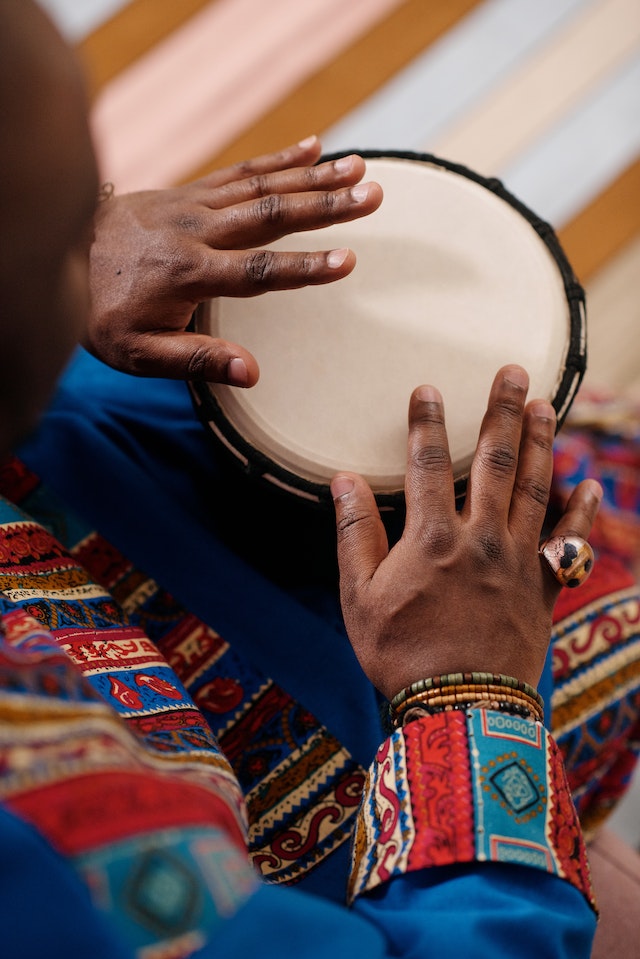
The use of goatskin drums can be traced back to as early as 400 BC in civilizations such as Mande’, Egypt, Greece, and Rome. These drums were an essential part of religious ceremonies and military campaigns, and the durable and resonant material of goatskin was commonly used for drumheads.
In Africa, the Djembe drum is a classic example of a goatskin drum, used for centuries in traditional ceremonies and cultural practices. Similarly, in the Middle East, the tabla is a popular hand drum with a goatskin drumhead on one end, used in Indian and Middle Eastern music.
In modern times, many drummers still prefer the sound and feel of goatskin over synthetic materials. It produces a warm and natural tone that is unique and difficult to replicate with man-made materials. The sound of a goatskin drumhead is warm, resonant, and full of character, making it an ideal material for drums played frequently.
We love all we do! Bekele’
Despite the popularity of synthetic materials in modern drumming, goatskin remains a popular choice for many drummers due to its durability and natural water-resistance. Goatskin drums have deep cultural significance in many cultures, beyond their musical qualities, such as the Djembe drum in West African culture, which is considered to have spiritual qualities and is used in traditional ceremonies and rituals.
The use of animal skins in drumming has raised ethical concerns in recent years. Some animal rights advocates argue that the use of animal skins is cruel and unnecessary, calling for musicians to switch to synthetic materials instead. While synthetic materials are an option, many drummers still prefer the unique tonal qualities of goatskin. Ethical concerns can be addressed through responsible sourcing and fair trade practices.
In conclusion, the enduring significance of goatskin in drumming is a testament to its unique tonal qualities, cultural significance, and durability. Whether you’re a professional drummer or simply a music enthusiast, exploring the use of goatskin drums can offer a deeper understanding and appreciation of the art of drumming. By using responsible sourcing and fair trade practices, we can continue to enjoy the benefits of goatskin drumheads while respecting animal welfare concerns.